
20 Gemini AI Motorcycle Photo Prompts for Cover Art
Create cinematic motorcycle images with fictional adult riders, helmet-safe poses, cover-ready negative space, and deliberate color stories. Includes 20 original prompts, reusable edit syntax, and a quick checklist for diagnosing wheel and reflection inconsistencies.
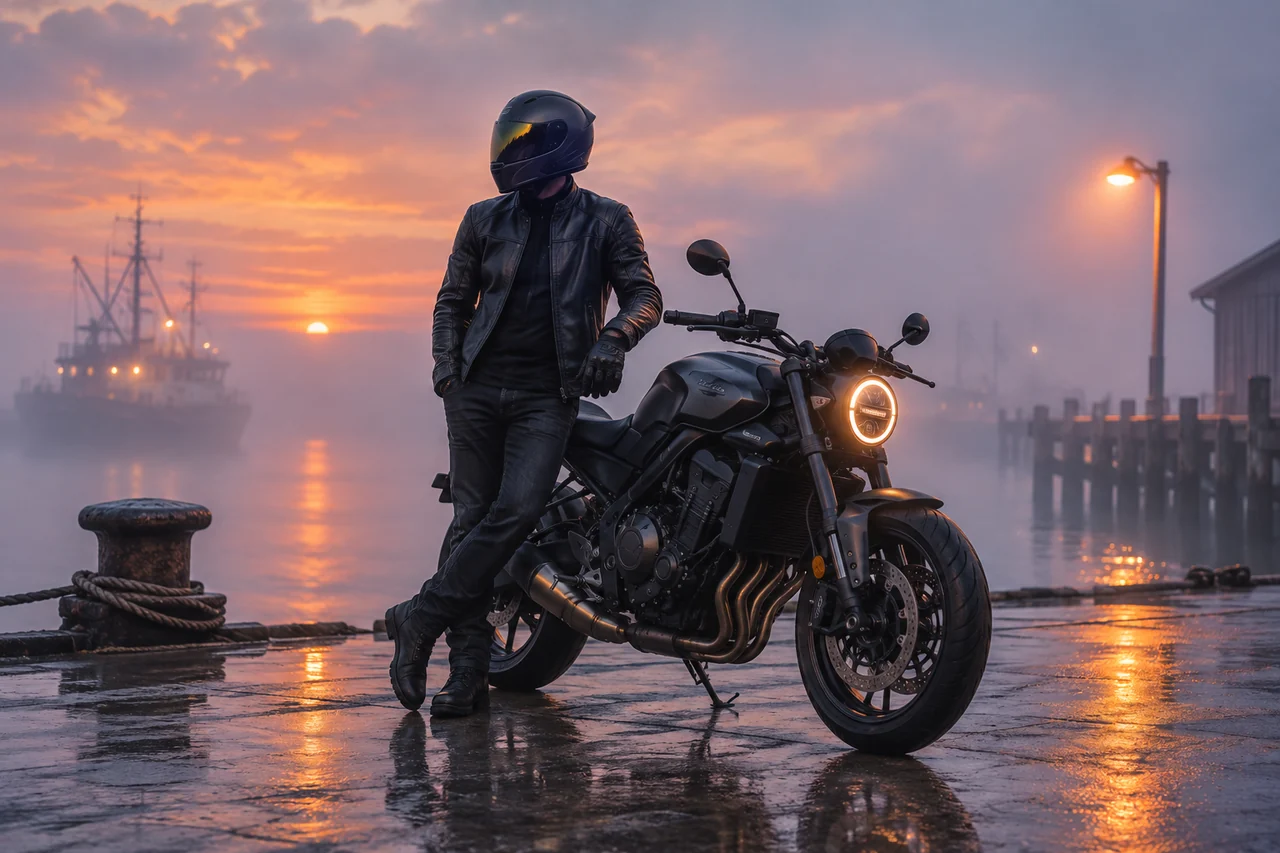
A memorable motorcycle image needs more than a dramatic bike and a beautiful road. For cover art, the composition also needs room for a title, a controlled color story, and enough visual clarity that the rider and motorcycle remain the focus. The 20 prompts below are written for Gemini image generation and editing; adapt the setting, palette, and empty space to suit your project. Each depicts a fictional adult rider wearing a helmet in a reasonable, stationary or controlled pose. None calls for a brand logo or an extreme stunt.
Google’s guidance for image-generation prompts recommends specifying the subject, composition, action, location, style, and constrained edits. Those elements shape the prompts here: describe what is in frame, where it sits, what it is doing, and what should remain unchanged when refining an image. Google’s Gemini image-generation prompting tips are the primary reference for that guidance. They do not establish that rapduos.com runs Gemini or offers a particular image-generation feature, so treat these as prompts to use in a Gemini image workflow available to you.
20 cover-ready motorcycle photo prompts
Replace details such as “left side” or “upper right” if your cover layout needs a different title area. Keep the requested negative space uncluttered; it is an intentional design feature, not a gap to fill.
-
Dawn desert silhouette: “Create a cinematic editorial photograph of a fictional adult motorcycle rider wearing a full-face helmet, seated upright on a parked, unbranded black motorcycle at a desert turnout before sunrise. Place rider and motorcycle in the lower-right third, with open pale sky across the upper-left half for cover typography. Restrained charcoal, dusty rose, and amber palette; long, soft shadows; realistic photographic detail; no text, logos, or other people.”
-
Rainy city, warm accent: “Photograph a fictional adult rider in a closed helmet standing beside a stationary unbranded motorcycle on a quiet city street after rain. Frame the rider in the right third, leaving the left half as dark, softly reflected pavement and blurred storefront light for title space. Cool slate-blue tones with a small amber streetlight accent, cinematic realism, no readable signs, no logos, no moving traffic near the subject.”
-
Coastal overlook: “Create an editorial motorcycle cover image of a fictional adult in a full-face helmet, seated safely on a parked, unbranded touring motorcycle at a coastal overlook. Wide landscape frame: bike in the lower-left, broad muted sea and hazy sky on the right for negative space. Sea-glass teal, fog gray, and cream color story; soft overcast light; natural proportions; no logos or text.”
-
Single red detail: “Show a fictional adult rider wearing a full-face helmet beside a stationary, unbranded motorcycle in a quiet concrete garage. Use a centered low-angle composition, but leave the upper third as plain shadowed wall for cover lettering. Mostly black, graphite, and warm gray, with one small red accent on the rider’s jacket; realistic editorial photography; no logos, text, or extra wheels.”
-
Golden-hour country lane: “Create a cinematic photograph of a fictional adult rider wearing a helmet, seated upright on a parked unbranded motorcycle on a safe gravel pull-off beside a country lane. Place the rider in the left third; let sunlit grass and softly blurred trees create clean negative space at right. Honey gold, olive, and warm brown; gentle backlight; no visible traffic, logos, or text.”
-
Blue-hour parking structure: “Photograph a fictional adult in a full-face helmet standing beside a stationary, unbranded street motorcycle on an empty rooftop parking deck at blue hour. Keep the motorcycle in the lower-right quadrant and reserve the left half as open, dark blue architecture for cover copy. Cool cobalt and steel with a subtle warm horizon; realistic lighting; no logos or readable markings.”
-
Autumn roadside stop: “Create a quiet editorial portrait of a fictional adult rider wearing a helmet, standing next to a parked unbranded motorcycle at a safe roadside pull-off in autumn. Place rider and bike near center-right, with a soft, uncluttered misty tree line on the left. Burnt orange, muted brown, and fog gray; natural overcast light; no logos, text, or dramatic riding action.”
-
Minimal studio cover: “Make a clean studio-style motorcycle photograph featuring a fictional adult wearing a full-face helmet, seated upright on a stationary unbranded motorcycle. Set the bike low and slightly right of center against a seamless warm off-white background, leaving the upper-left quadrant empty. Soft directional shadow, restrained black-and-cream palette, premium editorial mood, accurate wheel geometry, no lettering or logos.”
-
Mountain pass rest: “Create a cinematic wide photograph of a fictional adult rider wearing a helmet, standing beside a parked unbranded motorcycle at a mountain turnout. Place the subject small in the lower-left third, with layered blue-gray peaks and open sky filling the right half as negative space. Quiet, contemplative color story; clear natural light; no cliff-edge pose, logos, text, or other riders.”
-
Neon without the clutter: “Photograph a fictional adult in a full-face helmet beside a stationary unbranded motorcycle on a calm, rain-darkened side street at night. Keep the rider and bike on the left, leaving the right half as a simple out-of-focus wash of violet and cyan light. Cinematic but restrained, believable wet-ground reflections, no readable signs, logos, crowds, or text.”
-
Olive and cream garage: “Create an editorial portrait of a fictional adult rider wearing a helmet, seated safely on a parked unbranded motorcycle inside a tidy industrial garage. Frame the bike in the lower-left with generous blank cream wall at upper right for cover text. Olive-green jacket accent, charcoal bike, warm concrete; soft side light, realistic proportions, no labels or logos.”
-
Foggy forest entrance: “Show a fictional adult wearing a full-face helmet standing beside an unbranded motorcycle parked at a safe forest pull-off. Compose the rider in the right third and leave the pale foggy opening on the left uncluttered. Deep evergreen, silver mist, and muted black; cinematic photographic realism; no riding through fog, no logos, text, or extra people.”
-
Sunset and long shadow: “Create a wide, cinematic cover photograph of a fictional adult rider in a helmet, standing next to a stationary unbranded motorcycle on level ground at sunset. Keep both subjects low in the frame and toward the right, with a broad, simple apricot sky at left for typography. Long but physically plausible shadows; dusty pink, amber, and charcoal; no logos or text.”
-
Graphic monochrome: “Make a black-and-white editorial photograph of a fictional adult in a full-face helmet beside a parked, unbranded motorcycle against a simple concrete wall. Use strong but realistic side lighting; position the bike in the left third and preserve clear wall space at right. Crisp tire and spoke detail, subtle film grain, no visible brand marks, lettering, or artificial extra parts.”
-
Lakefront, muted teal: “Photograph a fictional adult rider wearing a helmet, seated upright on a stationary unbranded motorcycle at a quiet lakeside turnout. Place the rider and motorcycle in the lower-right, with calm water and a soft horizon opening across the left half. Muted teal, slate, and sand; early-morning haze; realistic reflections and proportions; no logos or text.”
-
Warm workshop portrait: “Create a cinematic editorial image of a fictional adult wearing a full-face helmet, standing beside an unbranded motorcycle in a clean, well-lit workshop. Keep the subjects on the right, leaving the upper-left as a dark, uncluttered wall. Warm tungsten highlights against deep blue-gray shadows; realistic tools kept subtle in the background; no readable labels, logos, or text.”
-
Snow-free winter road: “Show a fictional adult rider in a helmet beside a parked unbranded motorcycle at a safe, dry winter overlook, with bare trees in the distance. Frame the subject in the left third and leave a pale gray sky and soft hillside open on the right. Cool silver, muted brown, and a small burgundy clothing accent; no snow riding, logos, or text.”
-
Graphic orange wall: “Create a bold editorial motorcycle portrait of a fictional adult in a full-face helmet standing beside a stationary unbranded motorcycle against a plain terracotta wall. Place the bike low and to the right, leaving clean wall space across the upper-left for a title. Terracotta, black, and cream palette; even midday light; accurate tires, no logos, text, or graphic overlays.”
-
Quiet roadside diner: “Photograph a fictional adult rider wearing a helmet, standing beside a parked unbranded motorcycle outside a simple roadside diner in daylight. Keep rider and bike at the far right; use a softly blurred, uncluttered pale wall across the left half for cover typography. Faded turquoise, cream, and warm gray; documentary editorial feel; no readable signs, logos, or other patrons.”
-
Night highway overlook: “Create a wide cinematic photograph of a fictional adult in a full-face helmet standing beside a parked unbranded motorcycle at a safe overlook above distant highway lights. Put the subject in the lower-left, leaving dark open sky on the right for title placement. Deep navy, restrained gold light trails far in the background, realistic exposure; no riding, logos, readable text, or unsafe roadside positioning.”
Reusable edit syntax
Once a starting image has the composition you want, make one focused change at a time. This reusable pattern follows the useful distinction between describing the image and constraining an edit:
“Edit only [specific area or feature]. Change it to [specific desired result]. Preserve [composition, rider, helmet, motorcycle shape, lighting, palette, and negative space]. Do not add [logos, text, extra parts, people, or other unwanted elements].”
For example: “Edit only the open sky in the upper-left. Make it a slightly deeper blue-gray for stronger title contrast. Preserve the rider, motorcycle, framing, horizon, and all other colors. Do not add clouds, text, or objects.” Naming what should stay unchanged helps make the requested revision precise; it is not a guarantee that every edit will preserve every detail perfectly.
Quick diagnosis: wheels and reflections
If a wheel looks inconsistent: Check whether the prompt clearly describes a stationary motorcycle and a visible side view. Ask for “two correctly aligned wheels, round tires, consistent spokes, and realistic contact with the ground,” then request an edit limited to the affected wheel. If the perspective still looks wrong, simplify the camera angle or reduce background detail rather than adding more action.
If a reflection looks wrong: First establish what is reflecting: wet pavement, a window, or water. Then specify the light source and direction, for example, “soft amber streetlight reflected beneath the motorcycle on wet pavement.” Ask to correct only the reflection while preserving the motorcycle’s shape and position. Reflections need not be mirror-perfect, but they should agree with the surface and light in the scene.
Before using an image as cover art, run this reader checklist:
- Is the fictional rider visibly an adult and wearing a helmet?
- Is the motorcycle parked or posed in a controlled, plausible situation?
- Is there clean negative space where the title and other cover elements need to go?
- Does the palette have a clear story, rather than competing accents?
- Do both wheels, the ground contact, and any reflection look coherent?
- Are logos, unintended text, extra objects, and distracting background details absent?
- If revising, did you ask for one specific change and say what to preserve?
For a project that extends from still cover art to motion, rapduos.com’s /ai-video page is a relevant destination for exploring AI video. Its /pricing page is useful for reviewing pricing information published on the site; no price is stated here. These links do not establish a Gemini integration or a particular vendor feature. Start with the still-image prompt that best fits your cover, then refine the composition, palette, and empty space until the image serves the music as well as the motorcycle.
What's new on this page
- 2026-11-23 — Page published. Added 20 motorcycle image prompts, with composition guidance and practical editing checks.